Cryptoverse
UI UX design for a crypto e-learning platform - simplifying complex financial concepts through personalized learning paths and intuitive data visualization.

At a Glance
Responsible for leading user research, defining the product direction through ideation and wireframing, validating concepts via prototype testing with real users and delivering the final high-fidelity product experience.
User research insights & findings, user personas, low-fidelity wireframes, UI design, interactive prototype and usability test results.
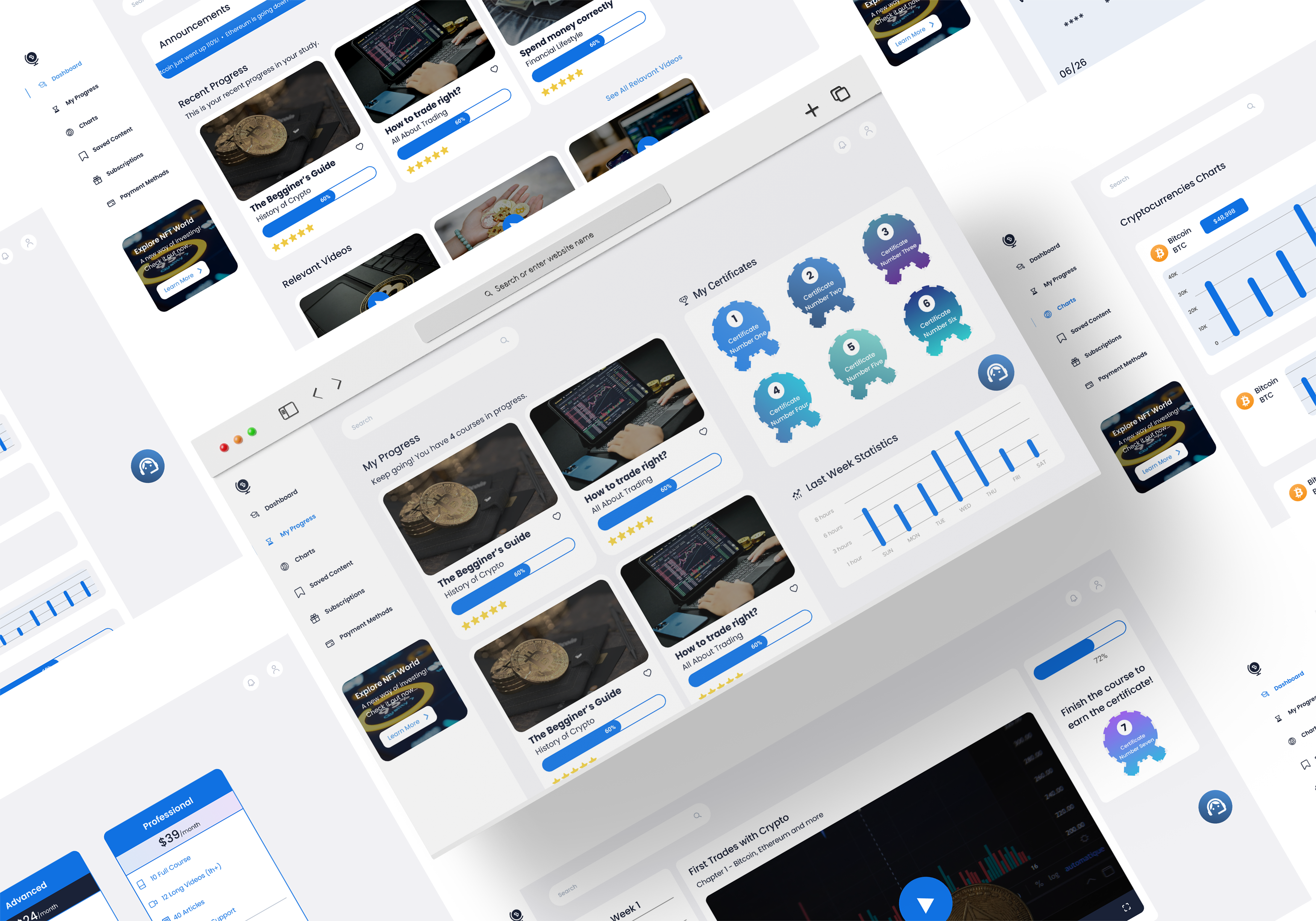
Planned a comprehensive crypto-education platform that connects users with industry professionals, enabling access to structured courses and expert-led guidance to support informed decision-making in the cryptocurrency space.
Challenge
A growing number of Americans are interested in cryptocurrency investments, yet most lack the foundational knowledge needed to navigate the market confidently. With an overwhelming amount of fragmented, often unreliable information available online, potential investors struggle to identify trustworthy resources - leading to poor decision-making or disengagement altogether. This creates a clear market gap: high demand for crypto education, but no accessible, structured solution that bridges the knowledge barrier and empowers users to invest with confidence.
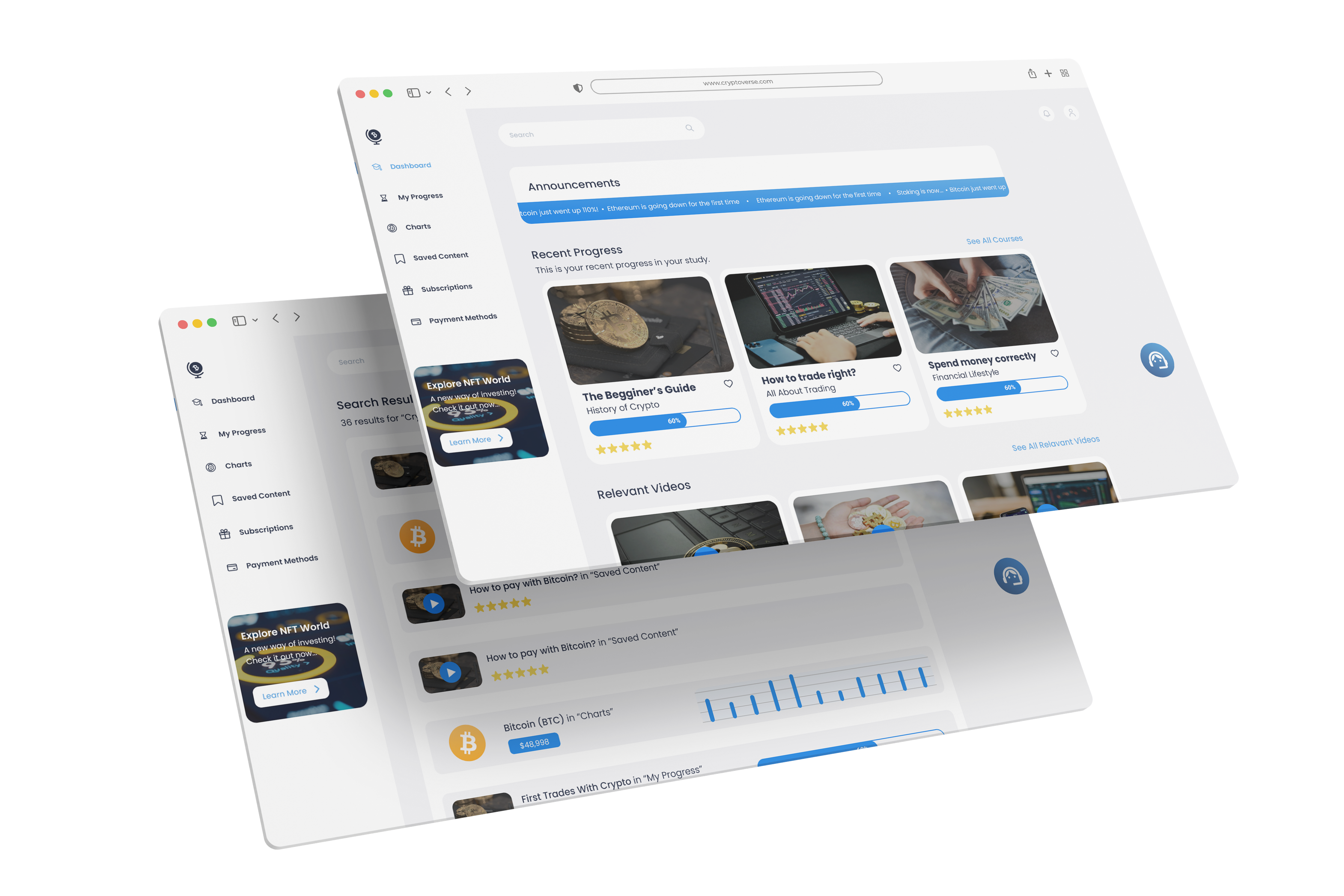
Process
Results
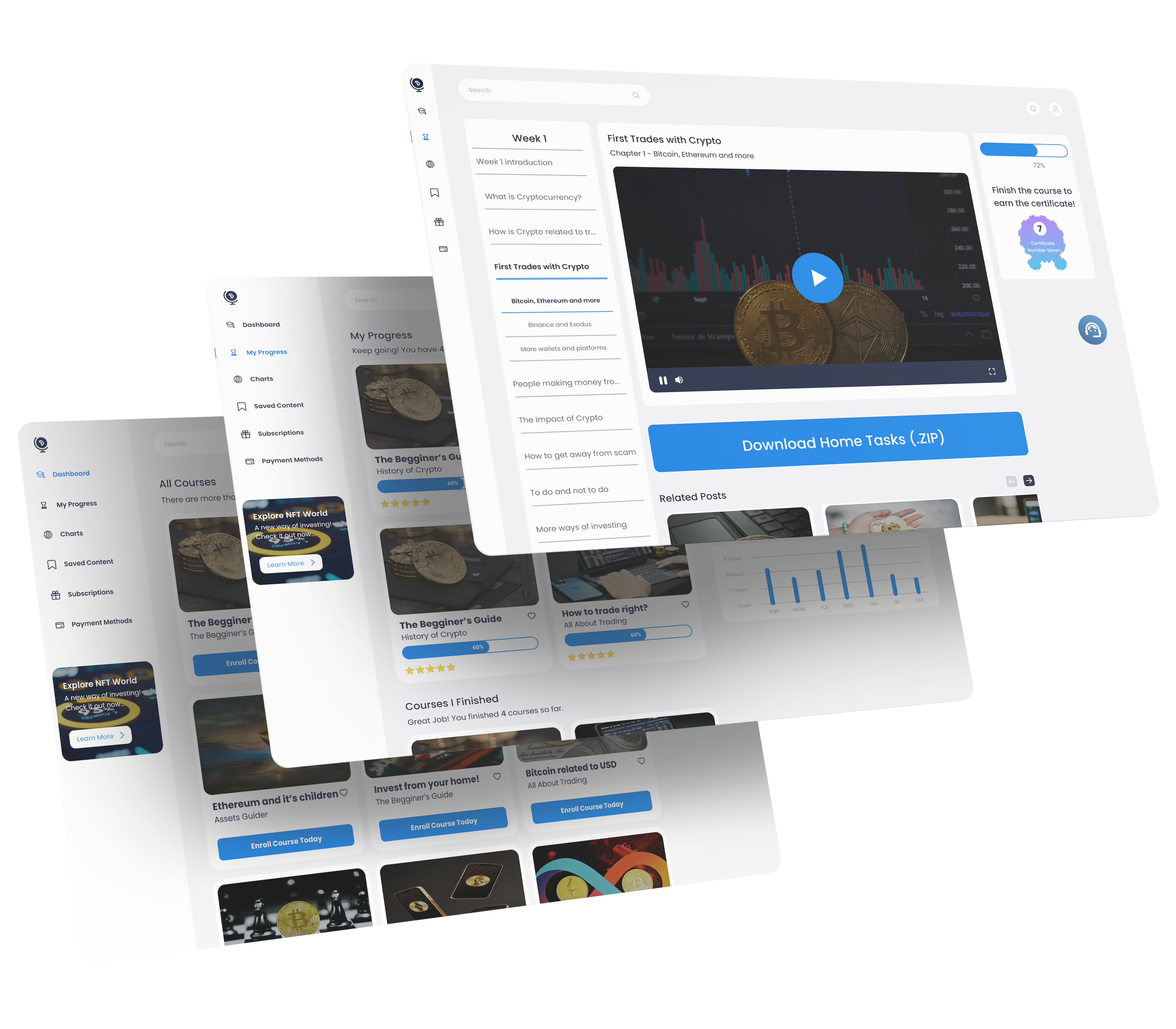
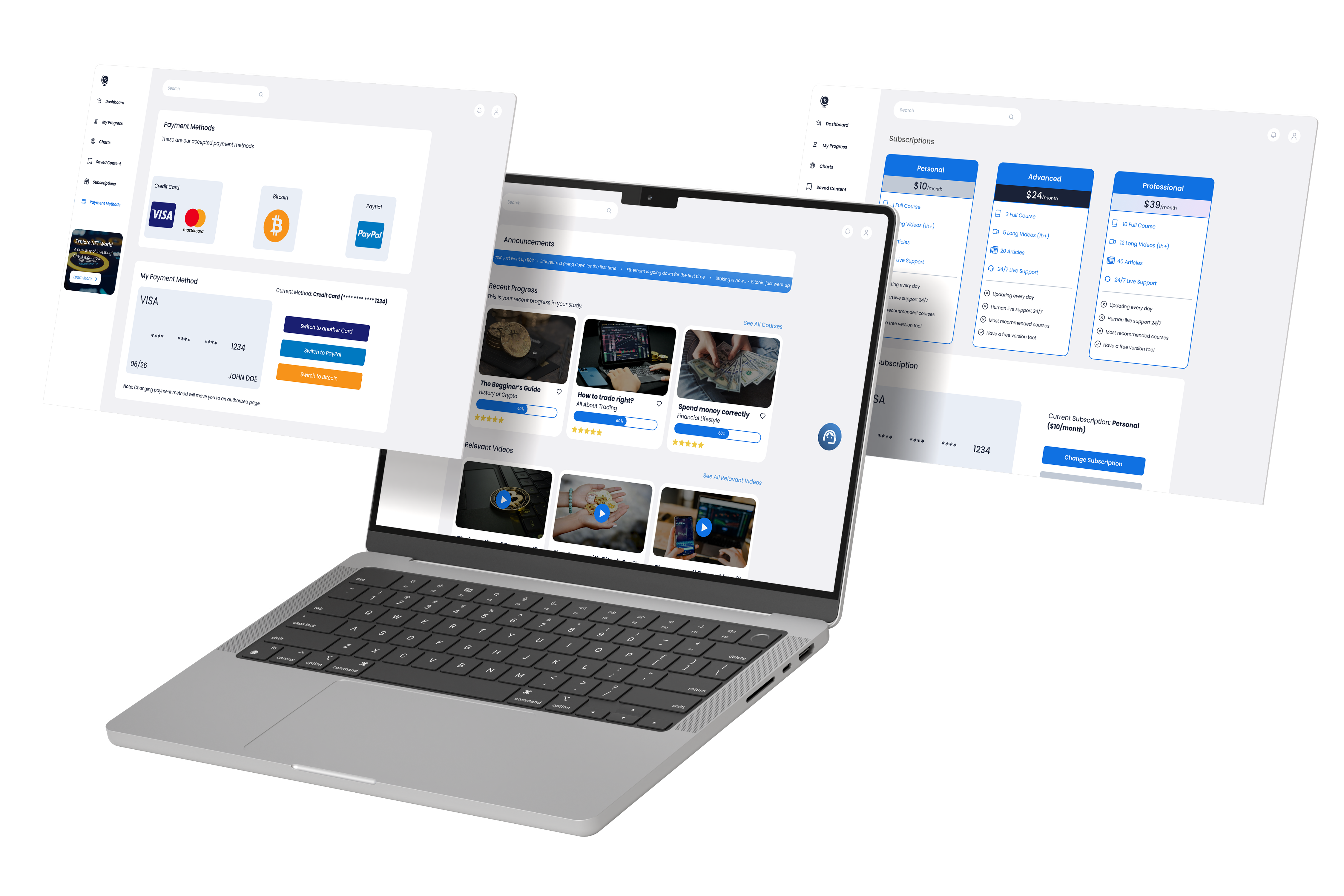
What I Did
I followed a user-centered design process, starting with research - surveying 24 potential users to understand their investment habits, availability and willingness to adopt a crypto education platform. From there, I defined the core user through personas, user stories, journey maps and a clear problem statement. I then moved into ideation with paper wireframes, refined them into digital wireframes and built an interactive prototype. Finally, I conducted an unmoderated usability study with real users, which validated core flows and surfaced actionable insights that informed the final design.
Personas

"I want to become a master at investments. Recently I heard about crypto world and it's very interesting. I wish I could know more about it."
- • Learn the best way to invest in Crypto
- • Have a human guider which will be able to advice when needed
- • One reliable platform which brings all the right information about cryptocurrency
- • Before investing he needs to deeply understand this world
- • Feels like gambling
- • Too many frauds and people who take advantage
- • Afraid to lose money
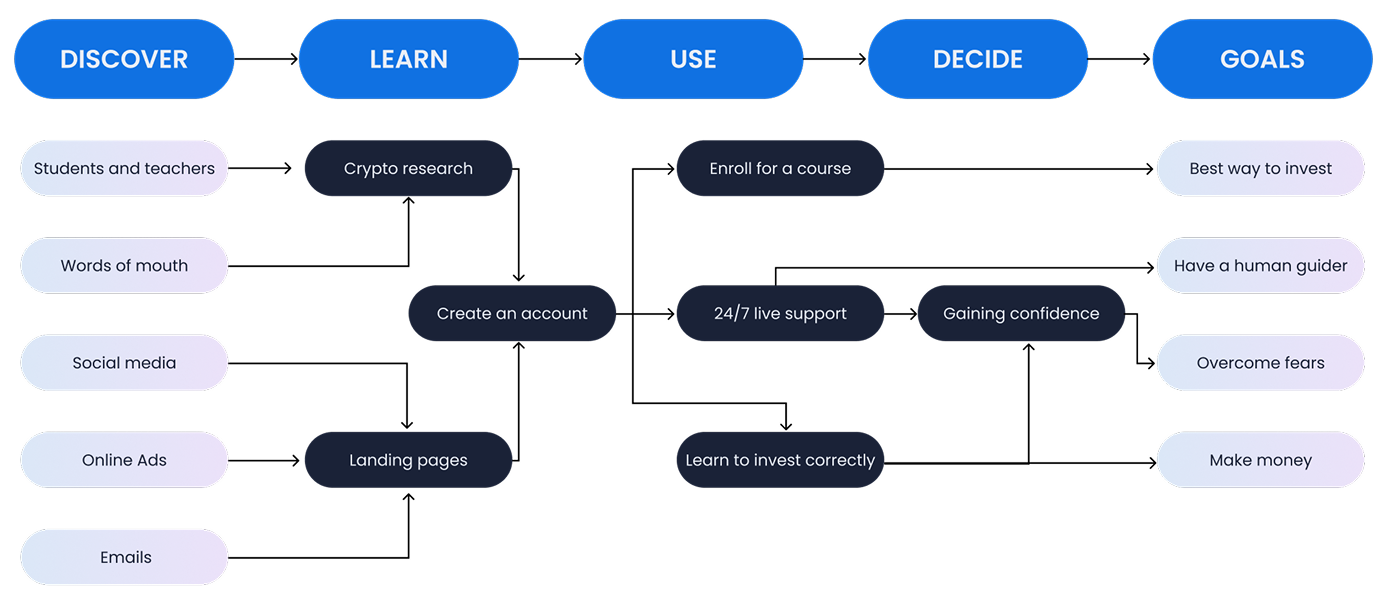
User Journey Map
Problem Statement
Young investors with a foundational interest in finance need accessible, expert-led guidance to confidently navigate the cryptocurrency market, but current resources are fragmented, unreliable and lack structured learning paths.
Solution
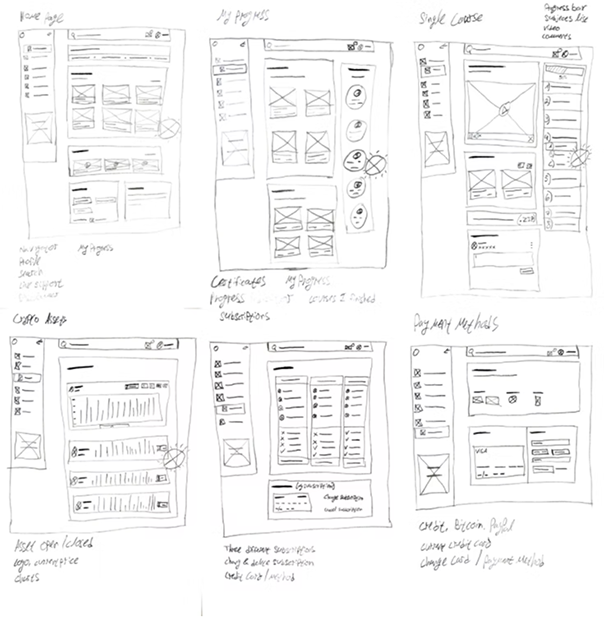
I started with rapid paper sketching to explore multiple layout directions and validate the product's core structure before investing time in digital execution. This approach allowed me to iterate quickly, prioritize the most effective solutions, and move into digital wireframes with a clear direction.
I translated the strongest paper concepts into a low-fidelity digital prototype, focused on the product's core user flow. Every screen was designed to directly address the pain points and needs uncovered in research - ensuring design decisions were driven by evidence, not assumptions.
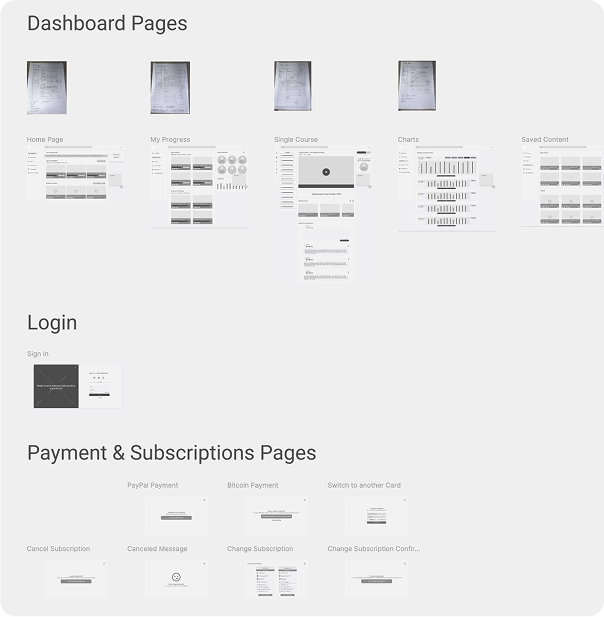
I translated the strongest paper concepts into a low-fidelity digital prototype, focused on the product's core user flow. Every screen was designed to directly address the pain points and needs uncovered in research - ensuring design decisions were driven by evidence, not assumptions.
User Testing
I translated the strongest paper concepts into a low-fidelity digital prototype, focused on the product's core user flow. Every screen was designed to directly address the pain points and needs uncovered in research - ensuring design decisions were driven by evidence, not assumptions.
Participants: 5 users, ages 21-38, 3 women and 2 men
Methodology: Remote, unmoderated usability study - participants were asked to complete core tasks on a high-fidelity prototype in 15-minute sessions across the US.
- How easily can users locate their active course?
- How do users feel during the learning experience?
- How efficiently can users manage their payment methods?
- How efficiently can users manage their subscriptions?
Impact
More Projects