Buddy
Product design for a social matching app - connecting younger users through shared hobbies and turning digital interest graphs into real-world friendships.
At a Glance
I was responsible for leading user research, defining the product concept through ideation and wireframing, validating designs via prototype testing with real users and iterating toward a final high-fidelity product experience.
User research analysis, product definition & ideation, wireframes, design system, interactive high-fidelity prototype, usability testing & iteration, developer handoff & QA collaboration, B2B expansion strategy with revenue stream opportunities, and pitch deck contributions.
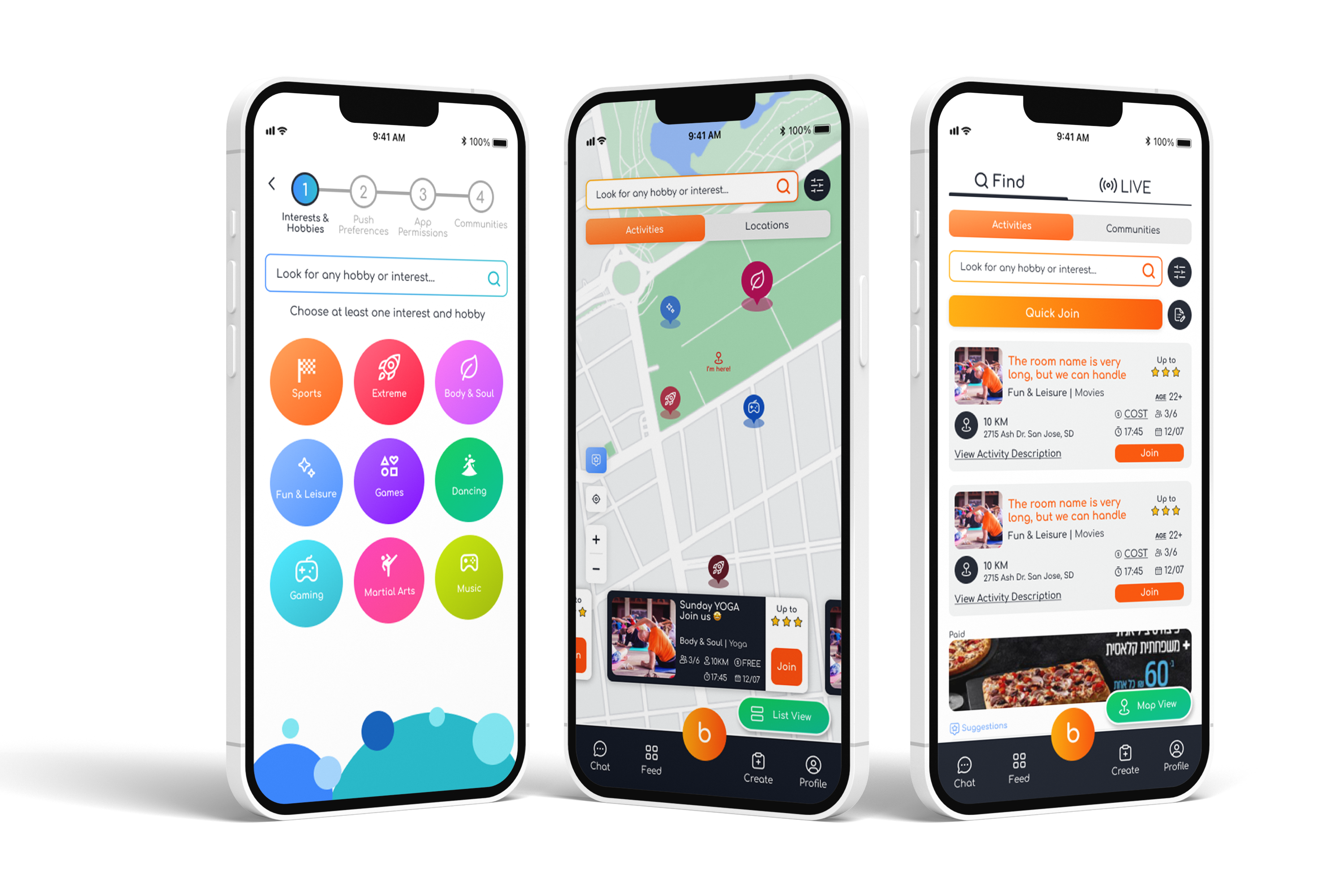
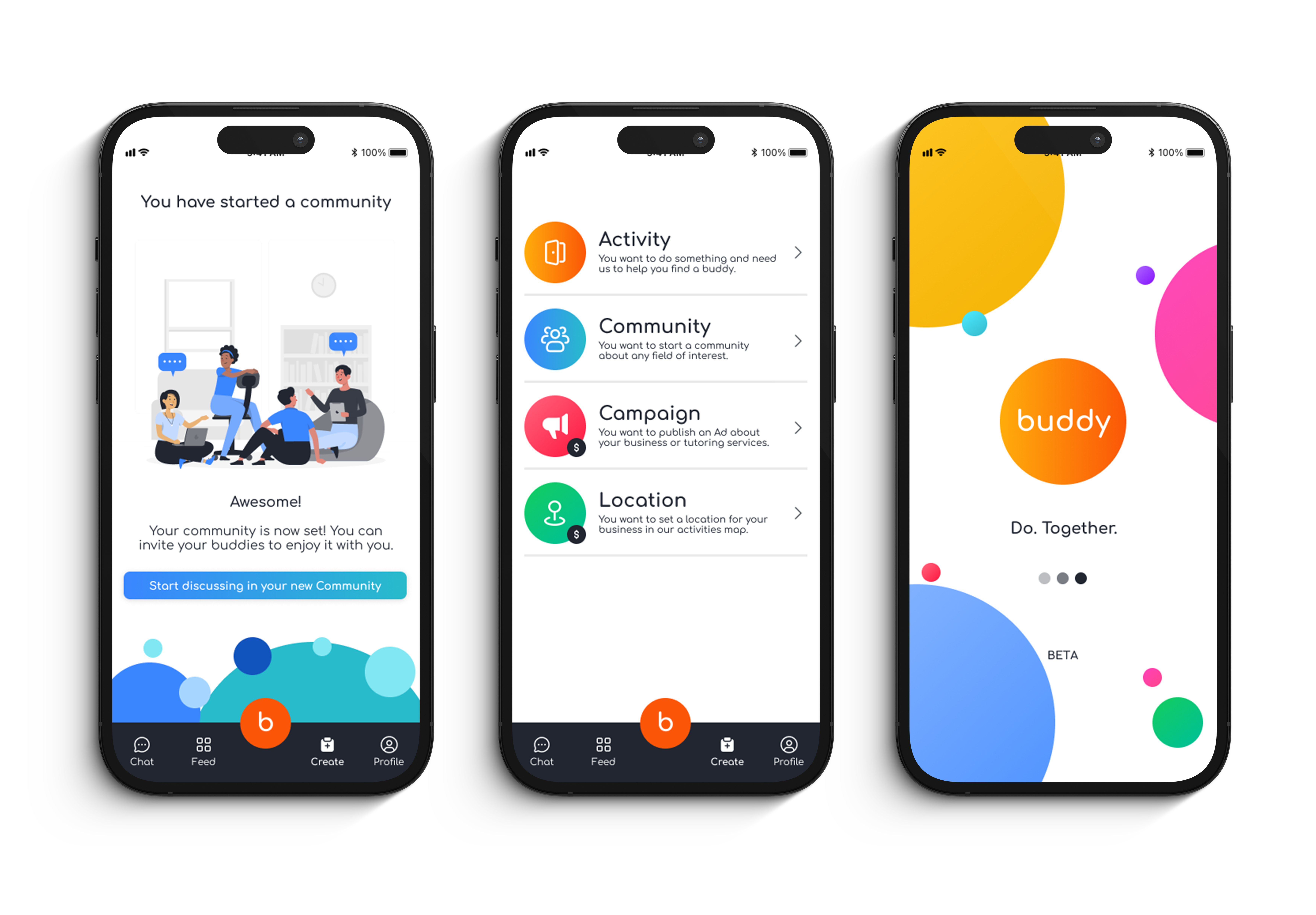
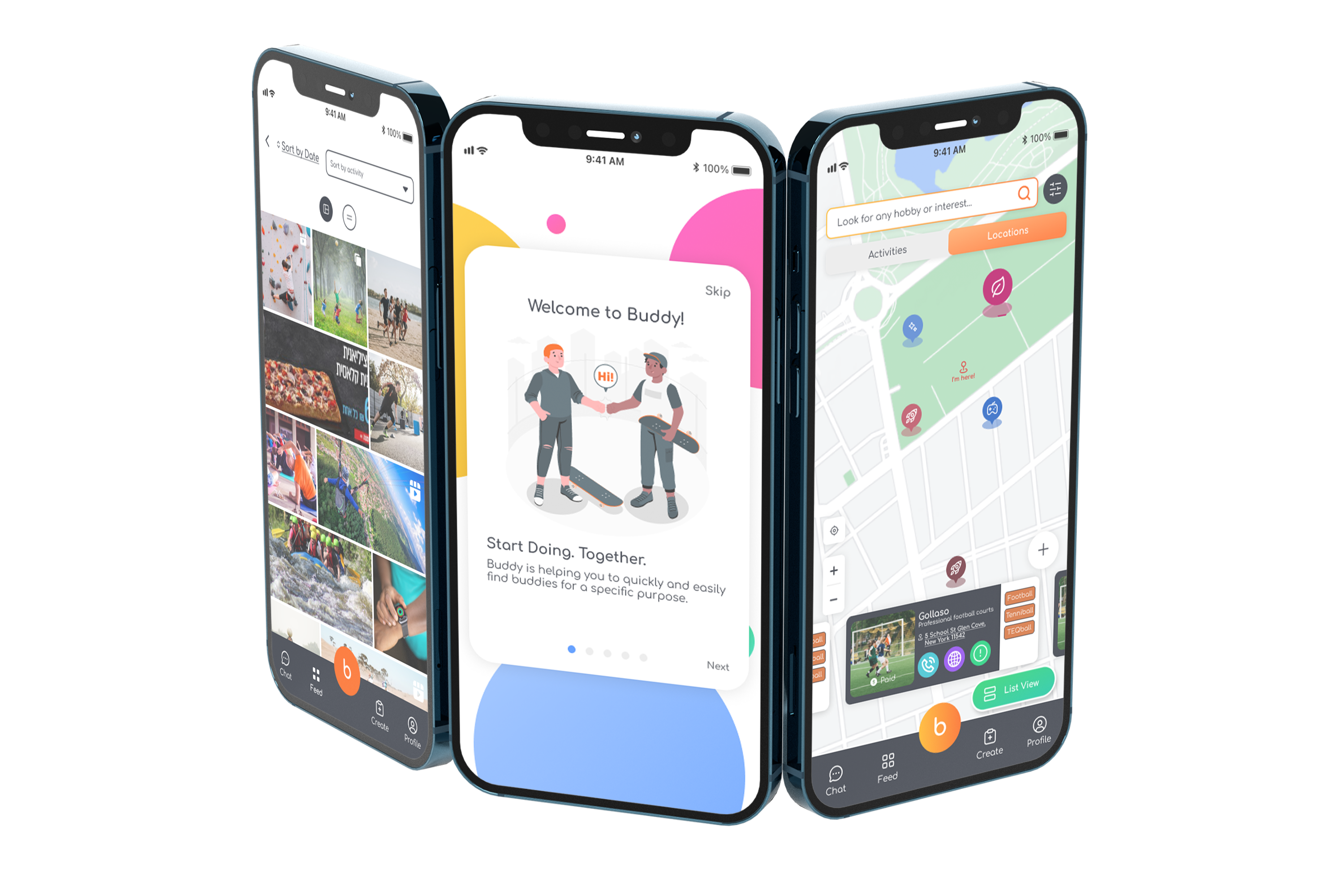
Buddy consolidates the fragmented social-hobby experience into a single platform - enabling users to discover and create activities, build communities, connect with like-minded companions and share memories.
Challenge
People want to explore hobbies socially, but finding the right companions is surprisingly difficult. Existing solutions, from social media groups to event platforms, are either too broad, too passive or not designed around shared interests, leaving users without a clear path from 'I want to try something' to actually doing it with someone.
Process
Results
What I Did
I joined the project after the initial research phase, analyzing the entrepreneur's findings to define the product direction. From there, I led the full design process - ideation, wireframing, design system creation and high-fidelity prototyping - while conducting usability testing with real users to validate decisions and iterate before handoff. I worked closely with the developer throughout implementation to ensure design quality and expanded the business thinking beyond B2C by identifying B2B opportunities and new revenue streams to strengthen the product's investment case.
Research Foundation
Before I joined the project, the entrepreneur conducted a comprehensive study with 106 participants in Israel - combining qualitative interviews and quantitative surveys to validate the core problem and assess market demand. These findings became the foundation for every product decision that followed.
Key Findings:
- 92% are open to discovering new hobbies and connections.
- 83% are willing to initiate new social connections given the right environment.
- 73% are uncertain about the social options available to them.
- 48% feel a clear lack of access to people who share their hobbies.
- 56% of participants were women, ~30 years old, students or employed.
Personas

"I want to find friends so I can do sports with and expand my hobby horizons."
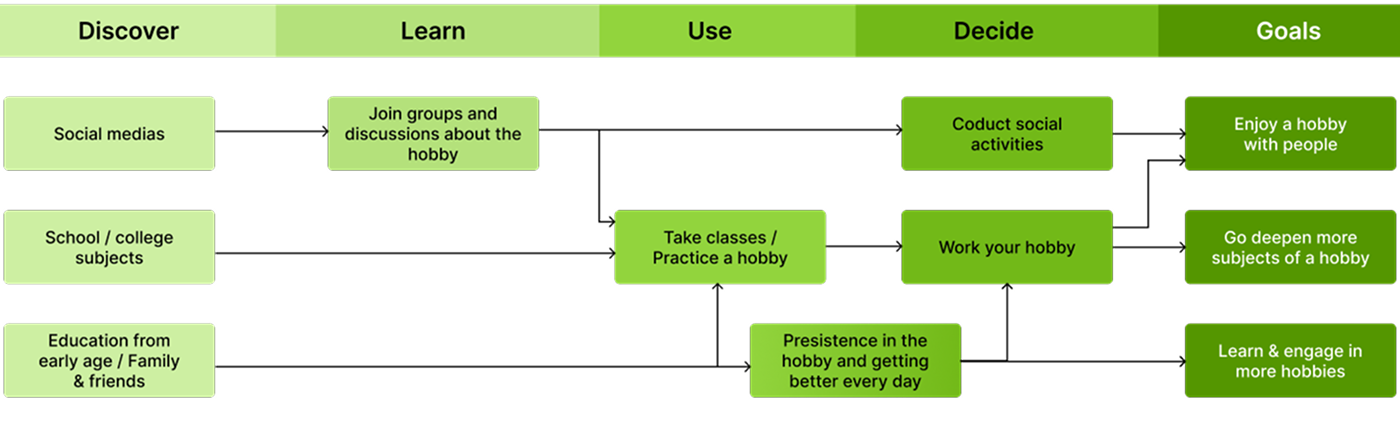
- • To enjoy my hobby with people who I also can call them friends after.
- • To learn more about my hobby and to go deepen more subjects in my hobby.
- • To learn and engage in different hobbies than mine.
- • One time events and meetings are the only thing that comes up from social media like Facebook.
- • Sometimes I don't have time to enjoy my hobbies.
- • Sometimes I can't find/it's too hard to find a proper partner for my hobbies.
User Journey Map
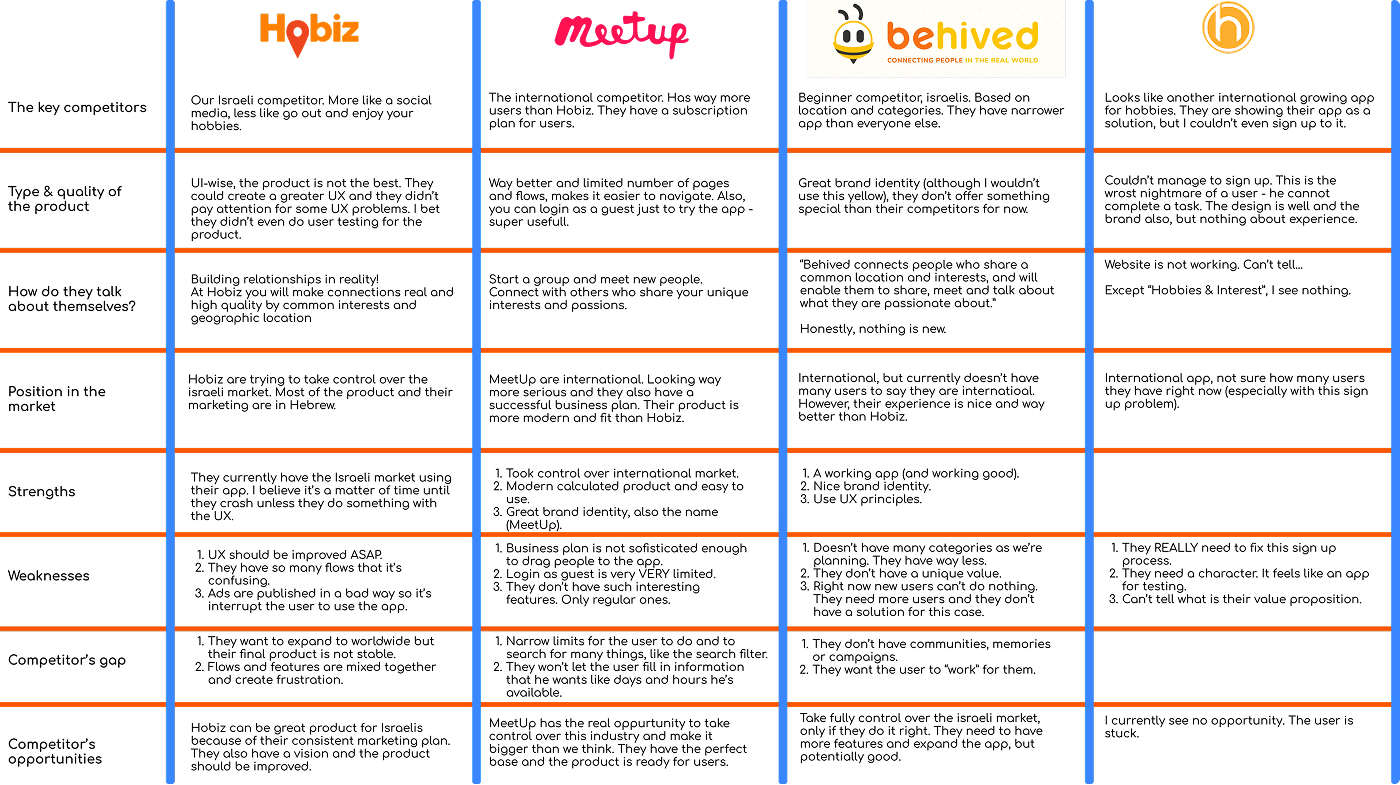
Competitive Analysis
Problem Statement
Young, socially active individuals want to explore hobbies with like-minded people, but have no dedicated platform to discover companions, join activities or build communities around shared interests - leaving them isolated in hobbies that are inherently social.
Solution
The entrepreneur came to the project with an initial wireframe vision of the product. This served as the foundation - a starting point that captured the core concept before research-driven refinement.
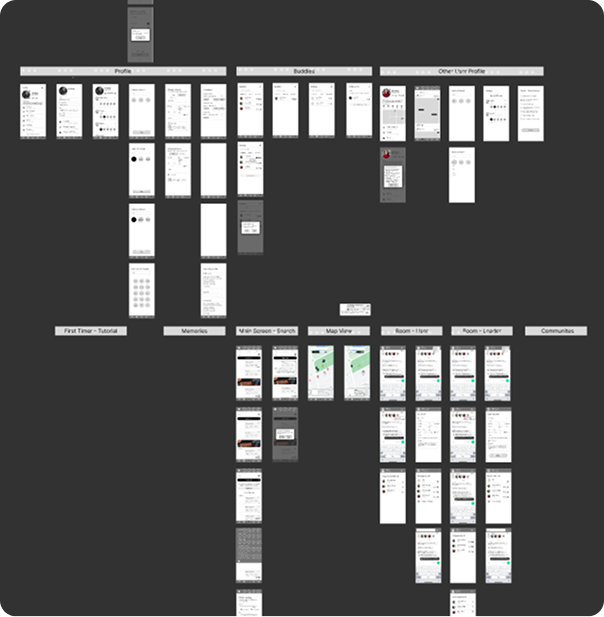
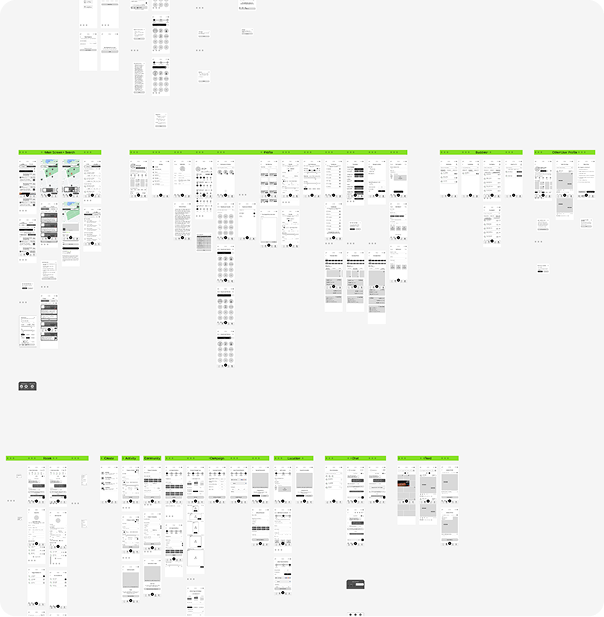
After analyzing the research findings, I refined the original wireframes into a V2 that balanced the entrepreneur's vision with validated user needs - restructuring flows and interactions to better serve the target user.
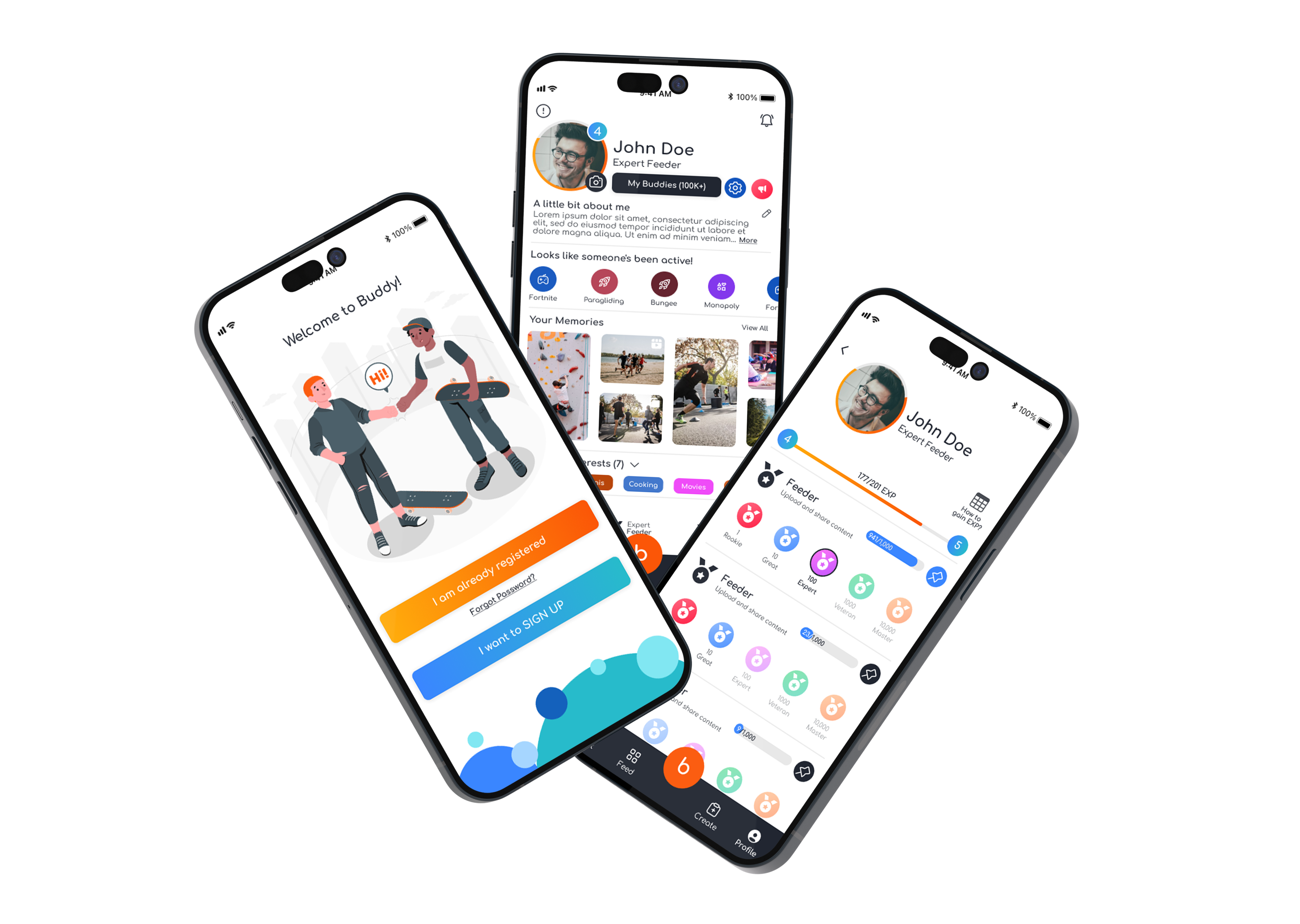
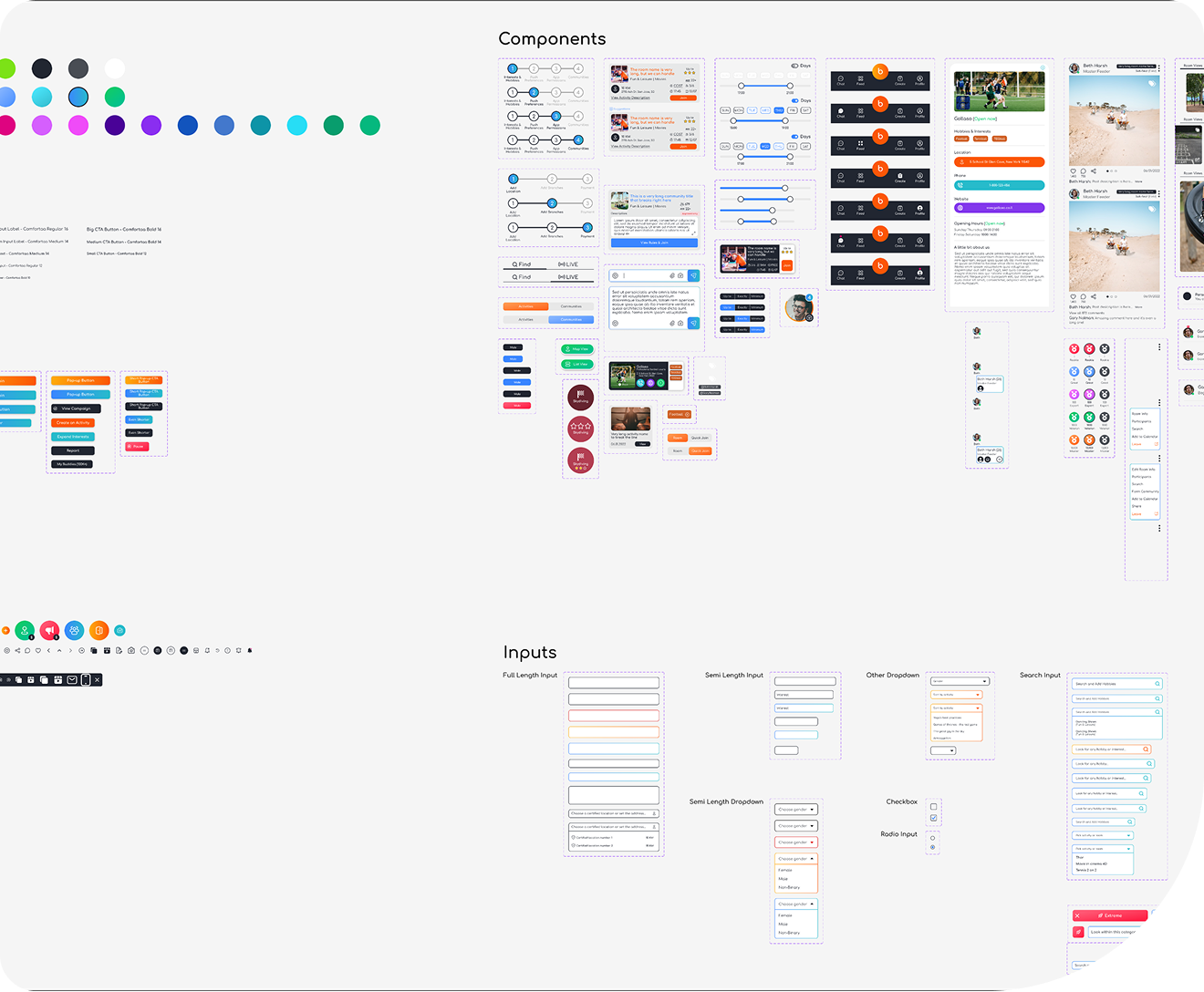
I translated the strongest wireframe concepts into high-fidelity screens, building a full design system to ensure consistency across the product. Every UI decision was grounded in research insights and validated through usability testing.
User Testing
I designed and conducted a moderated usability study to validate whether the core product flow was intuitive and the value proposition was clearly communicated to users.
Participants: 8 users, ages 22–30, moderated in-person sessions in Israel.
Methodology: Moderated usability study - participants completed core tasks on a low-fidelity prototype in 20–30 minute sessions, with real-time observation and follow-up questions.
Core Tasks:
- Complete onboarding - and evaluate comprehension of preferences and defaults.
- Navigate search results - assess whether users distinguish between menu and search flows.
- Locate user rank and update badge.
- Add a new interest - evaluate comprehension of the feature.
- Create an activity - assess understanding of screen content and leadership roles.
Success Metrics:
- Menu vs. search navigation accuracy.
- Time on task.
- Number of clicks to complete each task.
- Overall user sentiment.
Impact
More Projects